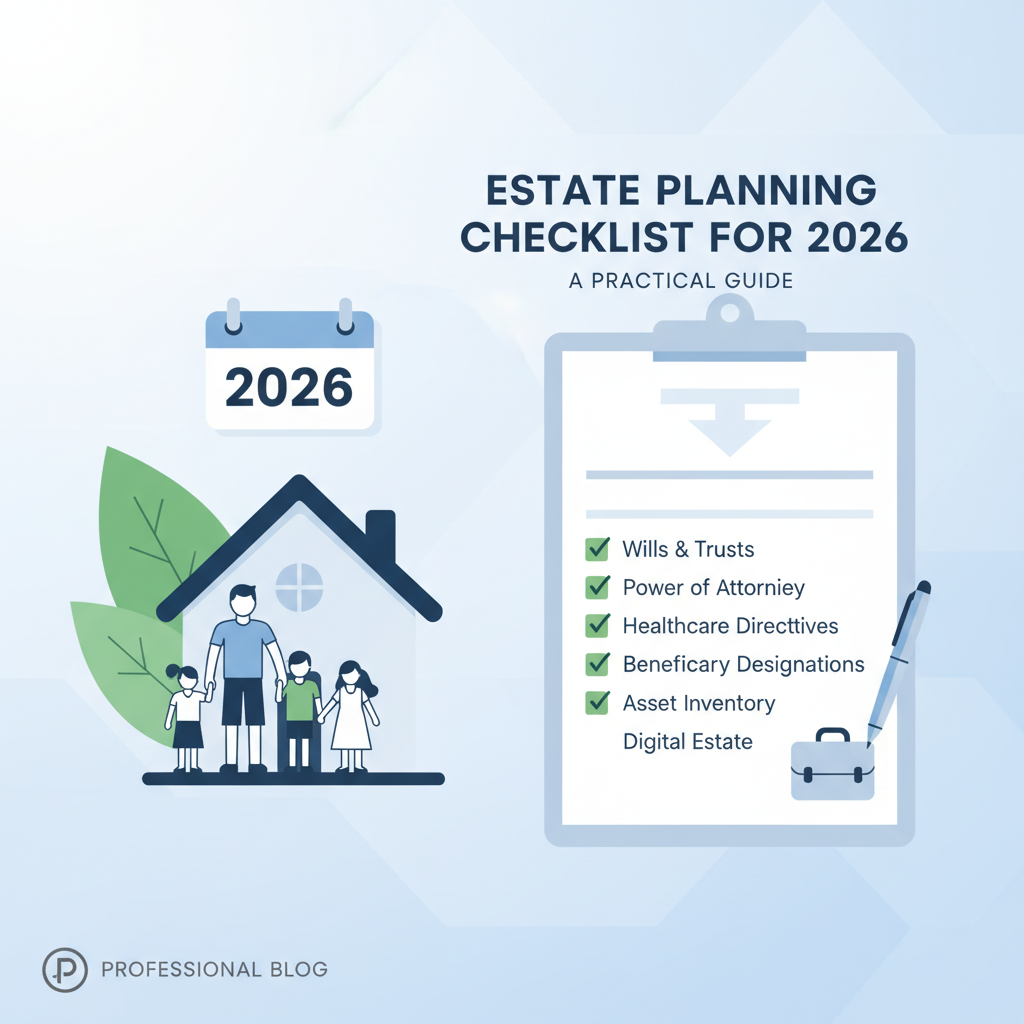
Estate Planning Overview: Your Essential Guide for 2026
Secure your legacy, protect your loved ones, and minimise tax burdens with a comprehensive estate plan tailored for today's changing laws and family dynamics.
Introduction
Estate planning ensures your assets are distributed according to your wishes, provides for your family during incapacity, and minimises taxes and legal complications.[1][2] In 2026, with evolving tax exemptions—such as the £15 million estate tax threshold (subject to inflation)—and rising focus on digital assets, incapacity planning, and blended families, a robust plan is more crucial than ever.[5][3] This overview covers key steps, essential documents, and checklists to get started, helping you take control of your legacy.[1][4]
Why Estate Planning Matters in 2026
Estate planning goes beyond death; it addresses incapacity, asset protection, probate avoidance, and family harmony.[2][3] Key reasons include:
- Tax efficiency: The 2026 estate, gift, and GST tax exemption stands at approximately £15 million per individual, with a 40% top rate—plan now to leverage annual gift exclusions of £19,000.[5]
- Probate avoidance: Trusts prevent costly court processes, delays, and public disclosure of your affairs.[2][3]
- Incapacity protection: Documents ensure seamless management of finances and health decisions if you're unable to act.[1][4]
- Modern challenges: Account for digital assets (e.g., email, social media), property transfers, and blended family dynamics.[3][2]
Without a plan, courts decide your fate, leading to disputes, frozen assets, and unnecessary taxes.[6]
Step 1: Create an Asset Inventory
Start by listing all assets for informed decisions on distribution, taxes, and debts.[1] Include:
- Real estate (homes, rentals, holiday properties)
- Financial accounts (savings, investments, pensions)
- Retirement accounts (IRAs, 401(k)s)
- Life insurance and annuities
- Personal effects, vehicles, and digital assets
This inventory aids equitable distribution among beneficiaries and simplifies executor duties.[1][4]
Essential Estate Planning Documents
A complete plan includes these core tools. Here's a summary:
| Document | Purpose | Key Features |
|---|---|---|
| Will | Directs asset distribution after death[1][4] | Names executor, beneficiaries; includes funeral wishes. |
| Revocable Living Trust | Manages assets during life and after death; avoids probate[2][3] | Privacy, incapacity management; fund with property, stocks (not always tax-deferred assets). |
| Power of Attorney (Financial) | Authorises agent for finances if incapacitated[2][10] | Pays bills, manages investments; durable (lasts through incapacity). |
| Advance Health Care Directive | Specifies medical wishes and appoints agent[2][10] | Covers end-of-life care; prevents court intervention. |
Trusts are vital for UK property owners to bypass probate, especially for family homes.[3] Life insurance beneficiaries must align to avoid estate inclusion.[5]
Step-by-Step Estate Planning Checklist for 2026
Follow this actionable checklist, prioritised for efficiency:[2][6]
- Review or create a living trust and fund it properly (transfer titles/deeds).[2][3]
- Update beneficiary designations on pensions, life insurance, and payable-on-death accounts—outdated ones cause disputes.[3][6]
- Confirm powers of attorney and health directives; add HIPAA authorisation for young adults.[2]
- Plan for children/young adults: Name guardians, set trust provisions; ensure they have their own documents post-18.[2]
- Address special circumstances: Digital assets, charitable giving, property tax strategies, and tax planning.[1][3]
- Organise documents securely: Store wills, trusts, deeds, passwords, and insurance details accessibly.[4]
- Review fiduciaries: Ensure executors, trustees, and agents are suitable, willing, and nearby.[6]
Revisit annually or after life events (marriage, divorce, births).[1][4]
Tax Planning and Advanced Strategies
- Gift strategically: Use £19,000 annual exclusion to reduce taxable estate.[5]
- Charitable giving: Integrate via trusts for tax benefits.[1]
- Life insurance: Structure to provide liquidity without inflating estate value.[5]
- Consult Cheshire Business Accountants for bespoke advice on 2026 thresholds, trusts, and compliance.
Communicating and Reviewing Your Plan
Share your plan's outline and document locations with trusted family to reduce uncertainty.[4] Review every 1-3 years or post-changes; 2026 trends emphasise digital assets and fiduciary checks.[8][6]
Conclusion
A well-crafted estate plan in 2026 safeguards your wealth, honours your values, and eases burdens on loved ones.[1] Start with an inventory today—contact professionals like Cheshire Business Accountants for personalised guidance.
Tags: estate planning, 2026 checklist, living trust, power of attorney, inheritance tax, probate avoidance, incapacity planning, UK estate planning
Category: Financial Planning
Sources
- https://www.thrivent.com/insights/estate-planning/estate-planning-a-values-first-guide-2025-2026
- https://ameriestate.com/the-ultimate-estate-planning-checklist-for-2026/
- https://hermancelaw.com/blog/california-estate-planning-checklist-2026/
- https://www.ssw.law/blog/2026/january/estate-plan-resolution-your-5-point-checklist-fo/
- https://morellolawgroup.com/2026-overview-of-estate-planning/
- https://www.drazenlaw.com/blog/your-2026-estate-planning-checklist-5-things
- https://shoptax.wolterskluwer.com/en/practical-guide-to-estate-planning-2026.html
- https://www.justvanilla.com/blog/2026-estate-planning-trends
- https://www.nationalunderwriter.com/2026-field-guide-to-estate-planning.html
- https://www.helmerlegal.com/blog/what-documents-should-you-include-in-your-estate-plan-in-2026/
Topics
Need help with your accounts?
Get in touch for a free, no-obligation consultation about your business finances.